Why a Front Crease Lengthens Your Leg More Than a Dark Color
Quick Answer: A front crease creates a continuous bright vertical line down the center of each leg, and the eye follows lines far more obediently than it follows shapes. Dark color narrows a silhouette — it makes the leg column slimmer — but it gives the eye no path to travel, and in very dark fabric the crease itself disappears. Lengthening comes from direction, not just slimness, which is why a creased mid-tone trouser routinely out-lengthens flat black, and why the seam on certain leggings quietly does the same job.
Once you see the distinction between narrowing and directing, half the classic proportion advice reorganizes itself.

What does a vertical crease actually do to the eye?
It builds a road, and eyes take roads.
Human vision processes edges and lines before it processes areas. A pressed crease is a ridge that catches light along its entire length, creating one unbroken bright line from hip to hem. When the eye lands anywhere on the leg, the line captures it and moves it vertically — down to the shoe, up to the waist — and that traveled distance is what registers as length.
Compare that to an uncreased pant leg: the eye sees a shape, estimates its proportions in one take, and moves on. Nothing invites travel. The leg is measured, not toured.
Two properties make the crease unusually powerful. It is central, running down the middle of the visual column where nothing interrupts it — unlike side seams, which sit at the silhouette edge and blur into the background. And it is continuous: no pocket, no print, no hardware breaks it. The eye completes uninterrupted lines and even slightly extends them beyond their endpoints, which is why a crease that ends at a shoe seems to pour into it.
The same mechanism explains why a break — a pant pooling at the ankle — costs so much. It does not just add fabric; it snaps the road at its destination.
Why does dark color get the credit the crease earns?
Because dark color does something real — just not this thing.
Dark, matte fabric absorbs light and softens the visual edges of the silhouette, so the leg column reads narrower. Narrower is genuinely valuable, but narrow is a width effect, not a length effect. A slimmer rectangle is still a rectangle; the eye does not travel it any further than it traveled the wider one.
Worse, deep black is where internal lines go to die. A crease works by light contrast along its ridge, and matte black fabric flattens that contrast to nearly nothing. The crease is still there; the eye just cannot find it. This is the quiet reason a creased charcoal, camel, or mid-grey trouser often lengthens more than the identical cut in black — the mid-tone lets the line show.
The two effects stack when you let them. Dark-ish fabric with a visible crease — charcoal rather than jet black, or black in a fabric with slight sheen so the ridge catches light — gives you narrowing and direction at once.
And the hierarchy matters when you must choose: if the goal is looking longer rather than smaller, direction beats compression. A visible vertical line in a mid-tone will out-lengthen flat black nearly every time it is tested against a mirror honestly.

Where do creases live in a modern casual wardrobe?
In more places than the word trouser suggests — the crease has cousins.
Tailored and pull-on trousers are the obvious home; many knit versions now come with a stitched-in permanent crease, which outlasts anything an iron produces.
Seamed activewear is the stealth category. Bootcut leggings with a front seam run the exact same central vertical line, which is a large part of why bootcut reads leggier than plain leggings at identical tightness. Flare yoga pants with center seams do it too, and the seam survives washing forever — a durability no pressed crease can match. If you have ever wondered why one pair of black flares looks longer than another, check for the seam before you check anything else.
Ribbed knits, pintucks, and pleats deliver the multiplied version: many fine vertical lines instead of one strong one. Weaker per line, but the aggregate direction still points the eye up and down.
Denim is the desert. Jeans almost never hold a crease and their heavy side seams pull attention to the silhouette edge — one reason jeans of equal slimness rarely lengthen like trousers do. Creased denim exists; it just reads deliberately retro.
To press a crease into trousers that lack one: inside out, damp press cloth, align the leg seams at the hem, press — do not slide — the iron. Ten minutes, and it survives two or three wears.
Myth vs Fact: Leg-Lengthening Lines
Myth: Any vertical element lengthens. Fact: Only continuous, visible ones. A vertical line broken by pockets, color blocking, or a hem break loses most of its pull. One unbroken line beats three interrupted ones.
Myth: Pinstripes are the strongest vertical. Fact: Many thin closely-spaced stripes read as texture from conversational distance. A single central crease at higher contrast moves the eye further than a pinstripe field.
Myth: You need heels for a long leg line. Fact: Heels change the leg itself; lines change what the eye does with it. A creased trouser falling to a flat shoe of matching depth routinely out-lengthens a broken-hemmed pant over heels.
Myth: Lines are a formalwear trick. Fact: The seam on bootcut leggings and flare yoga pants is the identical mechanism in weekend clothing. The crease went casual a decade ago; the advice never updated.
Myth: Shiny fabric lengthens because it highlights. Fact: All-over shine scatters light everywhere and gives the eye no single path. Shine helps only when concentrated along a ridge — which is precisely what a crease is.
FAQ: Crease and Seam Questions, Answered
Does the crease effect work on petite frames?
Especially well — when vertical space is limited, directing the eye through it matters more, not less. Pair the crease with a hem that meets the shoe; the combination is the strongest no-heel lengthener available.
Can shorts have a working crease?
Yes, and tailored creased shorts read notably longer-legged than flat ones. The line is shorter so the effect is smaller, but it survives — press them exactly like trousers.
How do I keep a crease through washing?
Buy it stitched or knitted in when you can — seamed leggings and permanent-crease knit trousers are zero-maintenance. Pressed creases in wovens need re-pressing every second or third wash; hanging by the hems with the crease aligned stretches the interval.
Do all seamed leggings create the effect?
Only front or center seams in a color where the seam shows. Side seams sit at the silhouette edge and do little, and tonal stitching on deep black hides the line — mid-tones with visible seam ridges are the sweet spot.
TL;DR:
- Lengthening comes from direction: a continuous central bright line the eye can travel, which is exactly what a crease is.
- Dark color narrows but does not direct — and matte black actually erases the crease that would.
- Bootcut leggings and flare yoga pants with front seams run the same mechanism in casual clothing, permanently.
- One unbroken line beats several interrupted ones; end the line at the shoe, not in a puddle of hem.
Stand in front of a mirror in your flattest black pants, then in anything with a visible front seam or crease. Rank them honestly for length, not slimness — most people re-sort their whole closet after that one comparison.
See It in Motion
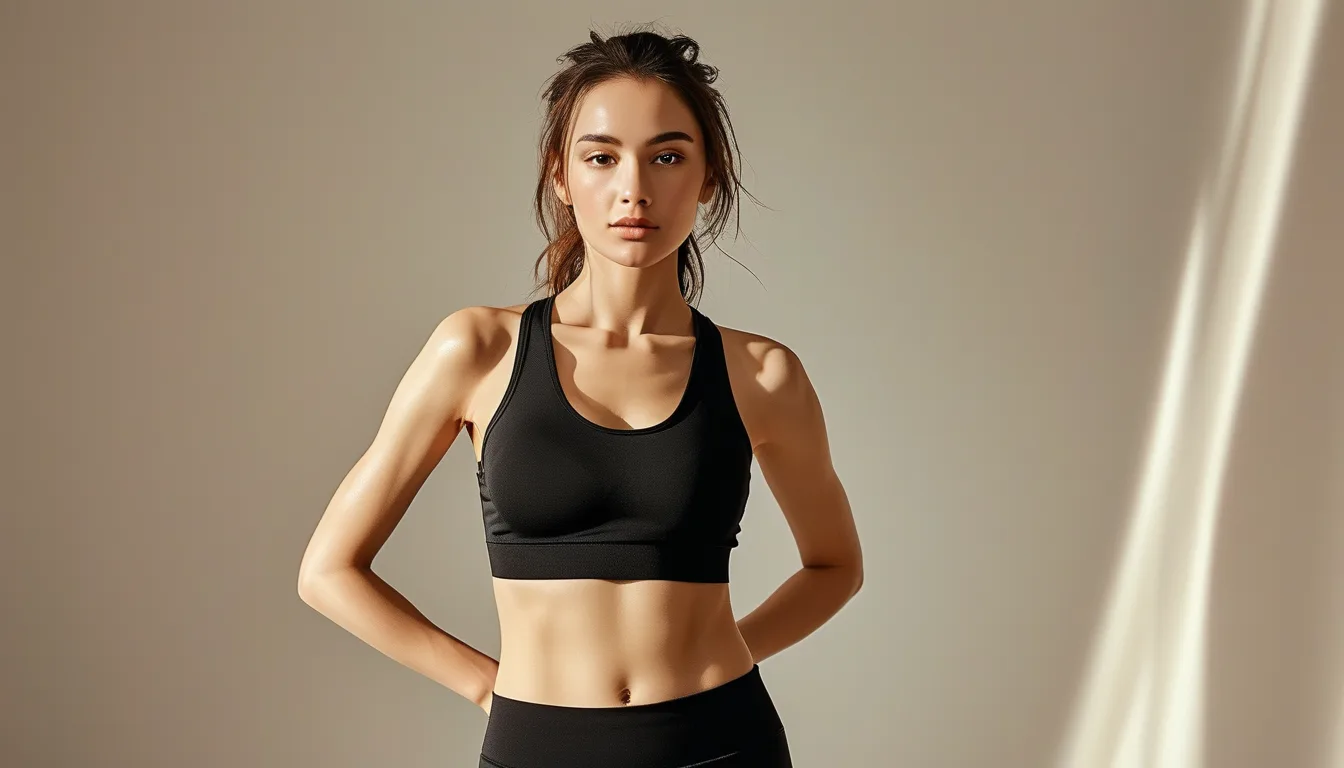
Seen here: Super High Waist Embossed Yoga Leggings with Inner Pocket — shop it on bubblelime.com
Keep Reading
This article is for general informational and styling purposes only. Fit, sizing, and product availability may vary.