Why a Vertical Seam Lengthens the Leg More Than a Vertical Stripe Does
Quick Answer: A printed vertical stripe stays where the fabric puts it and distorts as the fabric drapes, so it curves around the body and reads as a curve. A seam or a pressed crease sits on the structural line of the garment and stays straight because it is holding the fabric’s shape rather than riding on it. The eye follows uninterrupted straight lines, and the front crease of a trouser is the longest uninterrupted vertical line available on the human body.
Everyone tells you to wear vertical stripes.
Then you wear them, and the stripes bend around your hip, and you look wider than you did in plain trousers.
Why printed stripes so often fail
A printed line follows the fabric, and the fabric follows the body. Where the fabric curves over the hip or thigh, the line curves with it - and a curved line describes a curve rather than a length.
Stripes also do their strongest work where they are widest apart. Stripes that spread across the hip and compress at the knee actively communicate the shape you were trying to lengthen through.
Movement destroys the illusion. A stripe that is straight standing still bends with every step, and people see you in motion far more than at rest.
Stripe spacing changes the result completely. Narrow closely spaced stripes tend to read as texture at a distance; widely spaced ones read as individual lines and can broaden. The advice to wear stripes almost never specifies which.
And a stripe stops at the seam. Panel changes interrupt printed lines, so the eye’s travel breaks precisely where continuity was the point.
Why seams and creases work instead
A seam is a structural line, so it stays where the garment’s shape puts it, independent of how the fabric drapes over you.
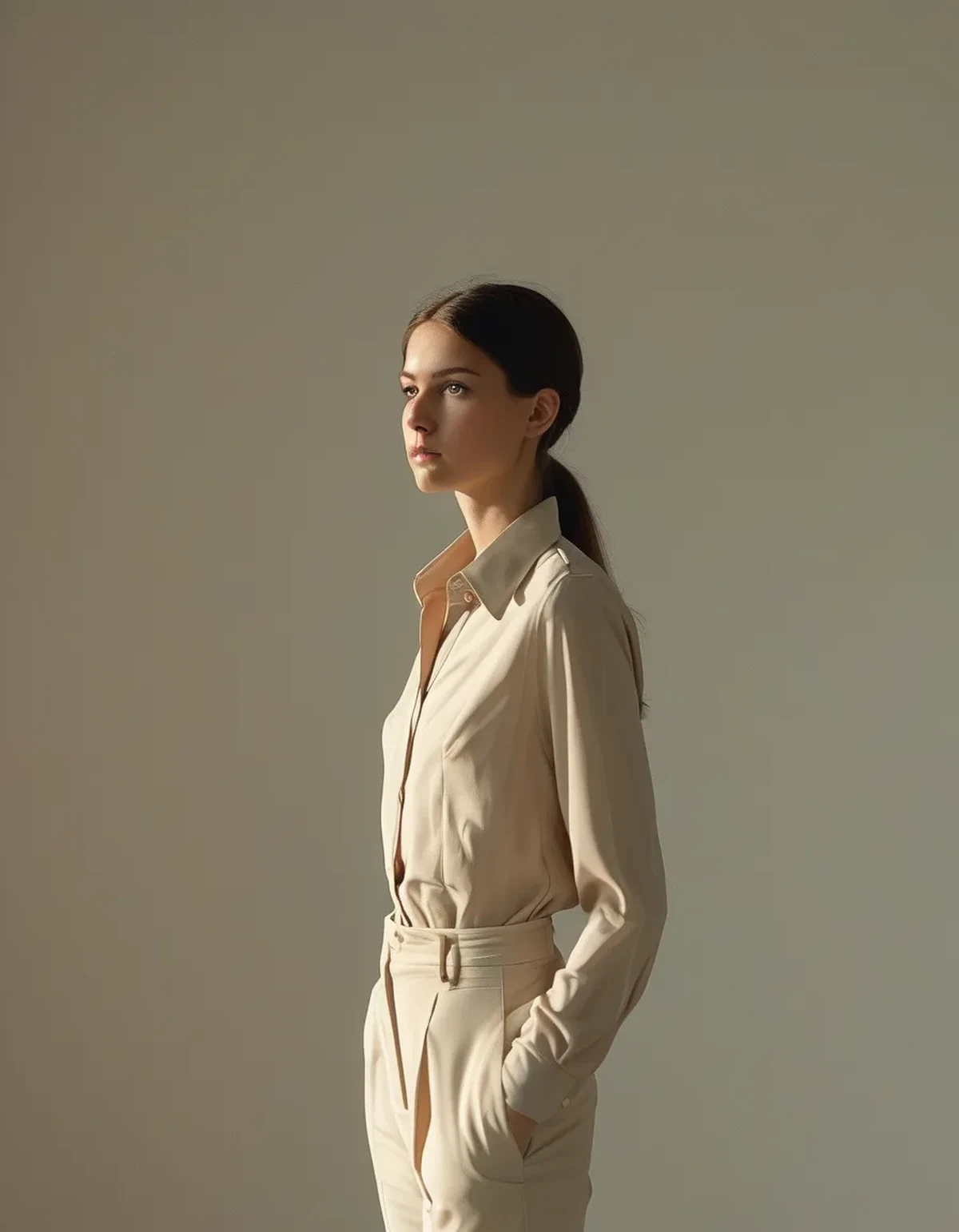
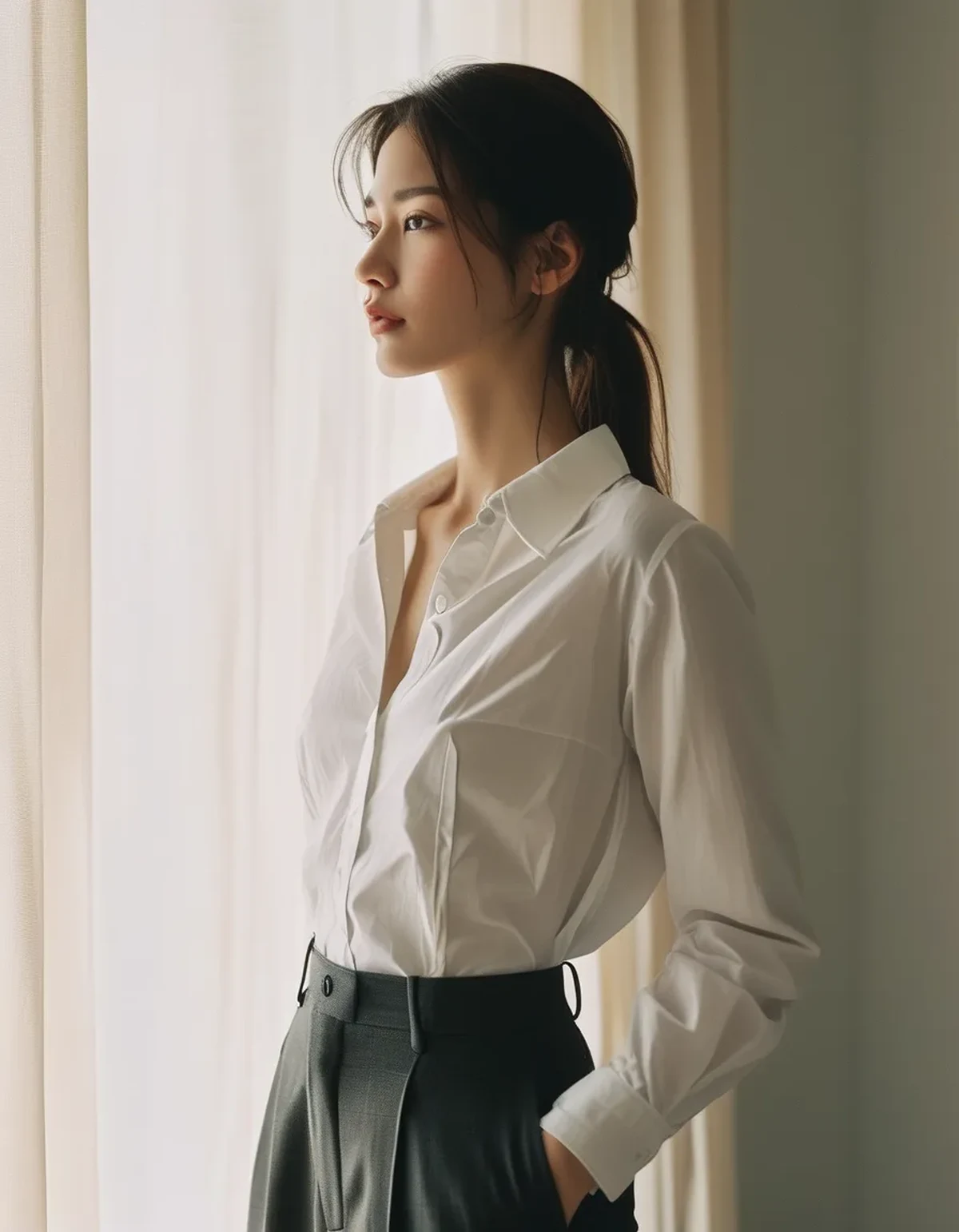
A pressed front crease is the strongest version. It runs from waistband to hem without interruption, sits at the centre of the leg, and holds a straight line through movement because it is a permanent fold in the fabric rather than a pattern on it.
Continuity matters more than contrast. An unbroken line the eye can travel along produces the lengthening effect; a high-contrast line that stops halfway does not.
Side seams work when they are actually visible - piping, a contrast stripe on a track pant, a topstitched seam. This is why a well-cut track pant with a side stripe can be genuinely lengthening while a printed stripe legging is not.
And a centre-front seam on a legging does the same job, which is why some seamed leggings read considerably longer in the leg than plain ones in the same colour and fit.
How to use this when shopping
Look for a pressed front crease in trousers if lengthening is the goal. Flat-front trousers without a crease lose the single most effective line available.
Choose fabrics that hold a crease. Wool blends and structured cottons keep it; soft rayons and jerseys will not, no matter how it looked when pressed.
Check the trouser in motion in the fitting room, not standing still. Walk five steps and watch whether the crease stays central or drifts sideways, which tells you whether the cut suits your stride.
Prefer visible side seams over printed side stripes on activewear. A topstitched or piped seam stays straight; a printed one curves with the fabric under stretch.
Keep the shoe close in value to the trouser so the line continues past the hem. A dark trouser with a pale shoe stops the eye at the ankle, which discards everything the crease just did.
And be wary of horizontal interruptions: contrast cuffs, ankle straps, thick sock bands. Any strong horizontal near the hem cuts the vertical line at its most valuable point.
What Nobody Tells You About Lengthening Lines
The longest available line is not the one on your clothes; it is the one made by continuous colour. Matching trouser and shoe outperforms almost any seam or stripe arrangement, because it removes the interruption entirely.
The crease in a trouser exists for structure, not for optics originally, and the visual benefit is a side effect of the pressing that kept trousers hanging correctly. It happens to be the most useful accidental feature in tailoring.
Leggings almost never have a lengthening line, which is why they rely entirely on colour continuity, hem placement and sock choice.
Rise placement changes the apparent leg length more than any line does. Where the waistband sits determines where the leg appears to start, and that single decision outweighs the entire stripes debate.
Hem width interacts with all of this. A hem narrower than the calf makes the leg look narrower and the shoe look larger; a hem wide enough to fall straight from the hip preserves the line.
And photographs mislead in a specific direction: camera lenses at close range distort proportion, usually shortening whatever is furthest from the lens. Judging trousers by a mirror selfie taken from chest height is a reliable way to reject something that looked fine in person.
FAQ: Vertical Lines and Leg Length, Answered
So should I never wear striped trousers?
Wear them when you like them. Just do not count on stripes for lengthening - narrow, closely spaced stripes on a fabric that hangs straight are the version that comes closest.
Do side stripes on track pants help?
Yes, when they are a seam, piping or a woven tape rather than a print, and when they run uninterrupted from waist to hem.
What about a centre crease in jeans?
Unusual and generally not recommended for casual denim, but a straight or wide-leg jean in a dark uniform wash achieves the same effect through colour continuity.
Does this apply to petite frames especially?
It applies to everyone and matters more on a shorter leg, where interruptions consume a larger proportion of the available line.
What is the single biggest lever?
Matching the shoe to the trouser in colour and value. It is more powerful than any seam, stripe or crease, and it costs nothing but the pairing decision.
TL;DR:
- Printed stripes ride on the fabric and curve with the body; seams and creases sit on the garment’s structure and stay straight.
- A pressed front crease is the longest uninterrupted vertical line available, and it holds through movement.
- Choose fabrics that keep a crease, and check the trouser walking rather than standing.
- On activewear, favour visible side seams and piping over printed stripes.
- Matching the shoe to the trouser in value beats every line-based trick.
Rise placement decides where your leg appears to start, which outweighs the entire stripe argument.
See It in Motion
Seen here: High Waist Yoga Leggings with Side Pockets — shop it on bubblelime.com
Keep Reading
This article is for general informational and styling purposes only. Fit, sizing, and product availability may vary.
