Why Shoe Toe Shape Changes Your Leg Line More Than Heel Height Does
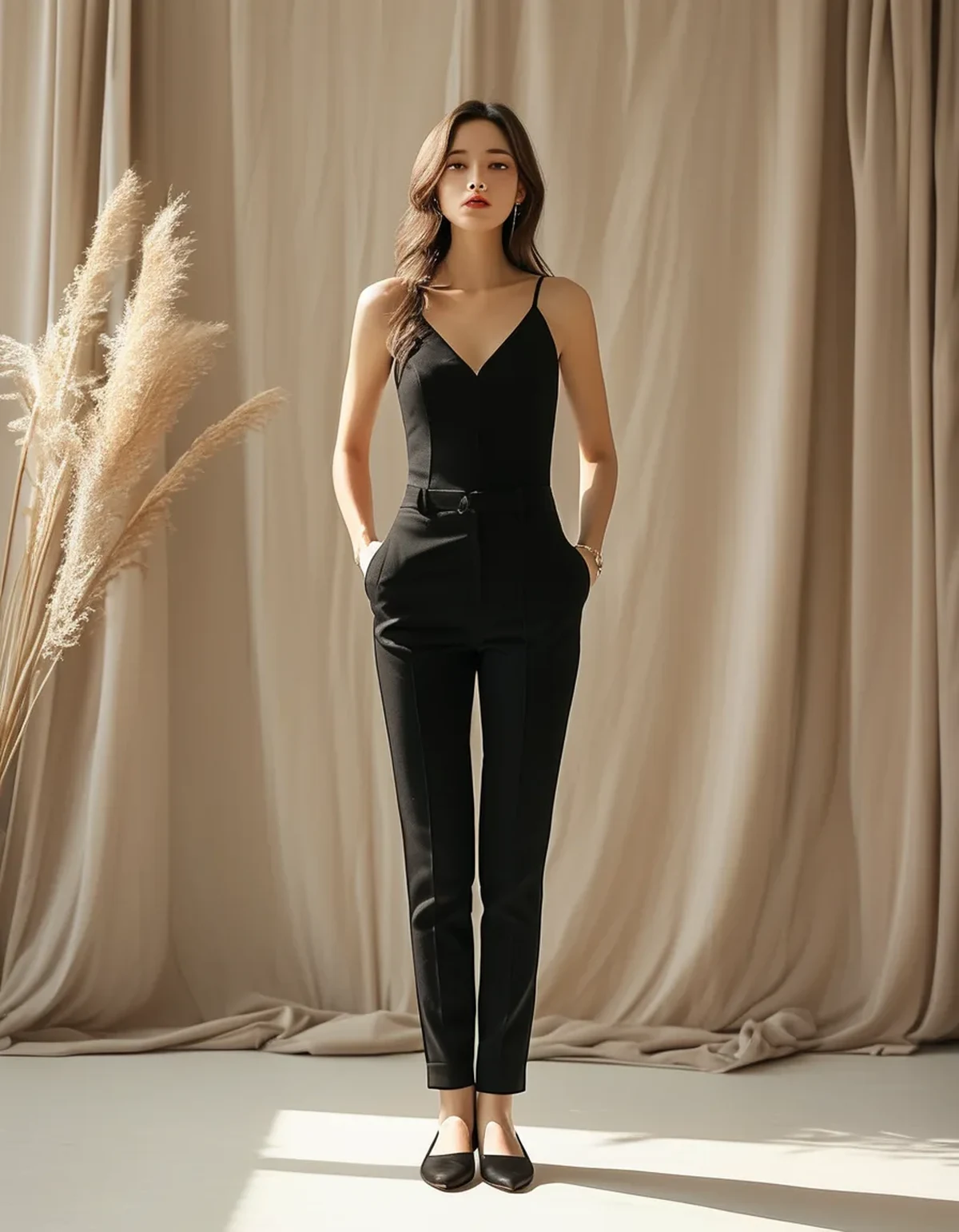
Quick Answer: The eye reads leg length as one continuous line from hip to the end of the foot. A pointed or almond toe extends that line past the foot and adds visual length; a rounded or square toe stops it abruptly. Because the extension can add an inch or more of apparent line, a pointed flat frequently lengthens more than a rounded two-inch heel — and the two together compound.
You bought the higher heel and your legs did not look longer.
The problem was at the other end of the shoe.

Why does the toe do more than the heel?
Because it changes the length of the line, and the heel mostly changes the angle of it.
The eye reads leg and foot as one unit. When there is no visible break in color or shape between ankle and shoe, the brain reads the whole shape as the leg. Anything that extends the far end of that shape reads as more leg.
A point continues the taper. Your leg narrows from calf to ankle. A pointed toe continues that narrowing past the foot, which the eye reads as a natural continuation rather than a separate object.
A round or square toe terminates it. A blunt end signals stop. The line ends at the toe box, and worse, a wide round toe reads as horizontal width at the exact point where you wanted vertical length.
A heel raises you without extending the line. It changes posture and calf definition, which is a real effect. But two inches of height under the heel adds far less apparent length than an inch of forward extension does, because forward extension lengthens the line the eye is actually tracing.
This is why pointed flats photograph so well. They are doing lengthening work usually credited to heels, at no cost in comfort.
How does color interact with toe shape?
They multiply. Either alone helps; together they do most of the work.
Matching shoe to skin or to hem removes the break. A shoe close in tone to your leg, or to the trouser it sits under, means the eye never registers a boundary. Contrast creates a hard stop and visually cuts the leg at the ankle.
Nude only works if it matches your actual skin tone. A beige that is two shades off reads as a separate light-colored object, which is the opposite of the intent. Matching your leg beats any fixed idea of what nude means.
Under dark trousers, a dark pointed shoe is the strongest combination available. Continuous color plus continuous taper produces the longest unbroken line you can construct.
Metallics behave like contrast, not like neutrals. A silver or gold shoe draws the eye to the foot, which stops the line even in a pointed shape.
Seasonal note: as you move into opaque tights and boots, the same rule holds and gets easier — tights matched to boot color create an unbroken column from hem to floor, which is why an all-dark leg in autumn reads longer than the same outfit in summer with a contrasting sandal.
Myth vs Fact: Shoes and Leg Length
Myth: Higher heels always make legs look longer. Fact: Beyond about three inches, most people shift posture to compensate — hips tilt, knees soften, and the effective line stops improving. A moderate heel with a good toe shape usually beats a very high heel with a bad one.
Myth: An ankle strap is fine as long as it is thin. Fact: Any horizontal element at the ankle cuts the line, and thinness only reduces the severity. A thin strap in a matching color is workable; a contrasting strap of any width is not.
Myth: Round-toe shoes cannot lengthen at all. Fact: They can, if the color matches your leg exactly and the vamp is cut low. Vamp height — how much of the top of the foot the shoe covers — is the second-biggest variable after toe shape, and a low-cut round-toe flat outperforms a high-cut pointed one.
Myth: Chunky shoes ruin any leg line. Fact: A chunky shoe under a wide or straight-leg pant that covers most of it reads as continuation, not interruption. The rule is about visible shape, so what the hem covers changes the answer.
Myth: This only matters if you are short. Fact: Proportion effects are relative to your own frame, not to an absolute height. The extension is the same regardless — it just shifts where the eye reads the balance point.
What should you actually buy or wear?
Prioritize in this order, and it costs nothing to test with what you own.
First, look at the vamp. A low-cut vamp that shows more of the top of the foot lengthens more than a high-cut one, and this holds across every toe shape. Test it in a mirror with the same trouser and two different shoes.
Second, choose almond over pointed for daily wear. Almond gets most of the extension effect with vastly more toe room. A sharp point is the maximum version and the least comfortable one.
Third, match tone to the hem. This matters most with cropped trousers, where the ankle is exposed and any contrast creates a break at the narrowest point.
Fourth, mind the sock. With a low shoe, a no-show sock preserves the line and a visible contrasting sock deliberately cuts it. Neither is wrong — but choose it, do not default into it.
Test it honestly: photograph yourself from mid-thigh down in two shoe options with identical trousers. The difference between a pointed flat and a round-toe flat is usually obvious in a photo and almost invisible in a mirror, because a mirror gives you a downward viewing angle that flattens the effect.
FAQ: Shoe Shape and Leg Line, Answered
Do sneakers ruin the leg line entirely?
No, but they need help. A low-profile sneaker in a tone close to your trouser works reasonably well. A chunky white sneaker under a dark cropped pant is the worst-case version, because it maximizes both contrast and horizontal bulk at the ankle.
What about boots?
Boots follow the same rules with one addition: shaft height matters. A boot ending at the widest part of the calf cuts the leg at its widest point. Either go above the calf or well below it, and match the shaft color to what is above it.
Is a pointed toe worth the discomfort?
Only if it fits properly. A well-made pointed shoe has the extension in front of the toes rather than squeezing them into the point. If your toes reach the taper, the shoe is too small — the extension should be empty space.
TL;DR:
- The eye reads leg and foot as one line; toe shape extends or terminates it
- A pointed or almond toe often lengthens more than a taller heel does
- Vamp height is the second-biggest variable — lower cut lengthens
- Matching shoe tone to leg or hem removes the break that contrast creates
- Ankle straps, contrasting socks, and mid-calf boot shafts all cut at the worst point
The heel gets all the attention because it is the obvious variable. The toe is quietly doing more, which is good news — the version that lengthens most is also the one you can walk in all day.
Keep Reading
This article is for general informational and styling purposes only. Fit, sizing, and product availability may vary.
