Why the Same Long Cardigan Lengthens Your Leg Line on One Day and Shortens It on Another
Quick Answer: A long open cardigan lengthens the leg line when it hangs as two uninterrupted vertical columns that never fully close, sits close to the body’s color value, and reveals a continuous strip of leg or bottom from waist to hem. It shortens the line when it closes, blouses at the hip, or ends at the widest part of the calf.
You own one cardigan that makes you look taller and one that makes you look shorter, and they are almost the same length.
Hem length is doing far less work than people assume. What actually decides the effect is whether the eye can travel from waist to floor without a horizontal interruption.
Here is what governs it, in order of importance.
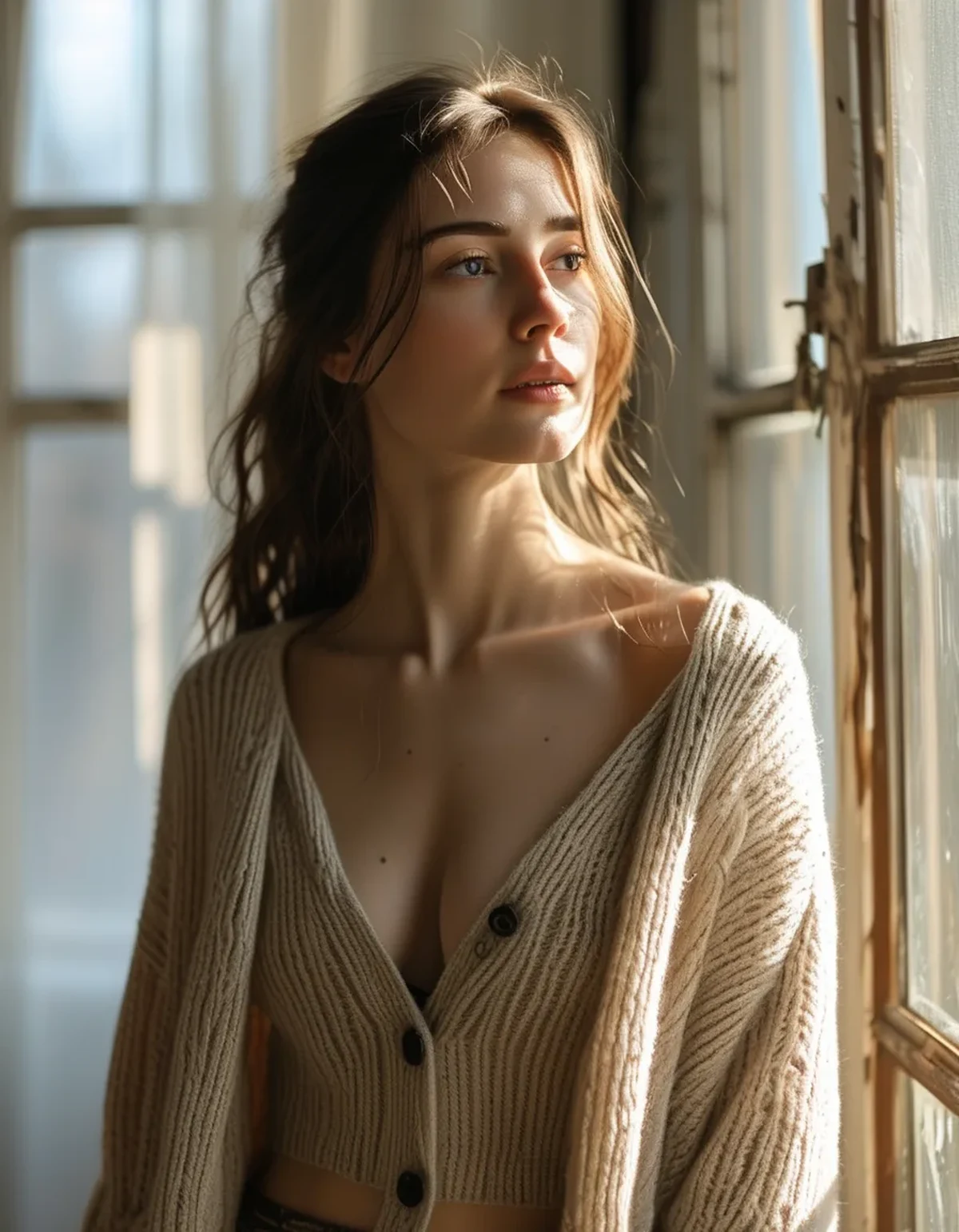
Why does an open cardigan lengthen at all?
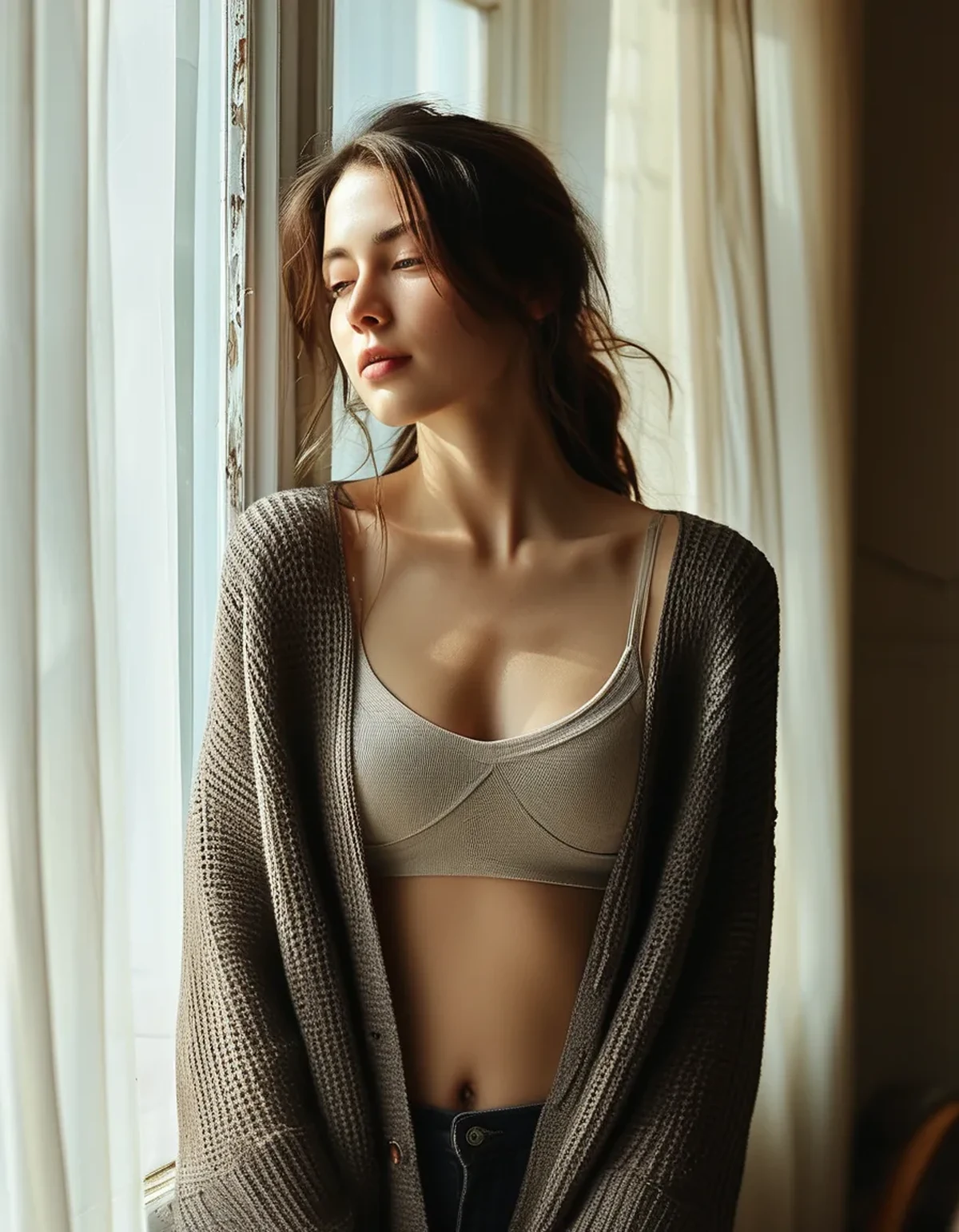
Because it creates two long vertical lines down the sides of your torso, and vertical lines pull the eye up and down rather than across.
A long open layer effectively frames a narrow central panel — whatever you are wearing underneath. The eye reads that panel as the body’s width, and reads the full drop of the cardigan as height. Both effects work in your favor.
The moment the cardigan closes, that disappears. Now you have a single wide block ending at a horizontal hem, and the hem becomes a cut line across your body at whatever height it lands.
This is why the same garment can go both ways in a single afternoon. Open, it is two vertical lines. Buttoned, it is one horizontal one.
Practical rule: if a cardigan only looks right closed, it is not a leg-line piece. Style it as a top instead and get your length from somewhere else.
Where should the hem actually land?
The unhelpful advice is “not at your widest point.” The useful version is more specific.
The two lengths that reliably work are well above the knee — roughly mid-thigh — or well below it, past the calf. Both leave the knee and the leg’s natural taper visible or fully committed.
The length that reliably fails is the one ending at the widest part of the calf, usually somewhere between the knee and mid-calf. That is where the leg is broadest, and a horizontal terminus there makes everything below it look stumpy and everything above it look boxy.
Two refinements:
- Longer works better with a slim bottom. A duster over a wide-leg pant becomes a lot of fabric with no visible taper.
- Shorter works better with volume below. A cropped or mid-thigh layer over a wide leg keeps the proportion legible.
And the exception worth knowing: a floor-skimming layer never cuts anything, because it has no visible terminus against the leg at all. That is why dusters are forgiving.
How much does color contrast matter here?
It is the second-biggest lever after open-versus-closed, and it is the one people never think about.
A cardigan that is much darker or lighter than what is underneath draws a hard boundary at its edges. Hard boundaries are horizontal information, and they interrupt the vertical read even on an open layer.
- Close in value to your bottoms: the strongest lengthening effect. Charcoal over black, camel over cream. The eye travels the whole length uninterrupted.
- Close in value to your top, contrasting with your bottoms: now the cardigan reads as part of your torso, which makes the torso look longer and the legs shorter. This is the common accidental mistake.
- High contrast on both: the cardigan becomes the subject of the outfit. That can be a great choice — just not a lengthening one.
Autumn palettes make this easy, because olive, chocolate, rust, and charcoal all sit in a similar mid-to-dark value range and blend into each other well.
Myth vs Fact: Long Layers and Height
Myth: Long cardigans make everyone look shorter. Fact: They make people look shorter when closed or when they end at the calf. Open, in a near value to the bottoms, they are one of the most reliable lengthening pieces available.
Myth: Petite frames should avoid maxi-length layers. Fact: A floor-skimming open duster works well on a petite frame precisely because it has no visible cut line. What does not work is a mid-calf length that terminates at the widest point.
Myth: You need heels to make it work. Fact: Heels help every version of this, which means they are not the variable. A flat shoe in a color near your hemline does most of the same job at a fraction of the discomfort.
Myth: Belting a long cardigan always improves the proportion. Fact: Belting closes it, adds a horizontal, and usually creates blousing at the hip. It can look great and pull the waist in — it is simply not a leg-line strategy.
What kills the effect even when everything else is right?
Three failure modes, all fixable.
Blousing at the hip. A cardigan in a heavy or clingy knit that pools slightly at the hip creates a soft horizontal exactly where you least want it. Look for knits with enough weight to hang straight, and check yourself from the side, not just the front.
Sleeves that end at the hip. A long sleeve ending right at the hip bone adds two more horizontal marks at the widest part of your frame. Push sleeves to the forearm — it lifts the visual weight and adds a vertical line at the wrist.
A shoe that stops the eye. You can do everything right and then end the line with a contrasting ankle strap or a bright sneaker. The last few inches determine whether the eye runs out or stops. A shoe near your hem color completes the column.
The mirror check that catches all three: stand back six feet, unfocus your eyes slightly, and look for horizontal bands. Whichever band is strongest is where the eye will stop.
FAQ: Long Cardigan Proportion Questions, Answered
Does this work the same with a long coat?
The principles are identical, but coats are usually heavier and more structured, so blousing is less of a risk and closing is more common. An open long coat over a near-value base is one of the best leg-line combinations there is. A belted coat is a waist strategy, not a leg strategy.
What about a long cardigan over a dress?
It works well when the dress hem and cardigan hem are noticeably different lengths — at least four inches apart. When they land within an inch or two of each other, you get a confusing double hem that reads as a mistake even when it was deliberate.
Is there a length that works for everyone?
Mid-thigh is the safest bet across the widest range of heights and bottoms, because it clears the hip, avoids the calf entirely, and works with both slim and wide legs. If you are buying one long layer, buy that one.
TL;DR:
- Open beats closed, always — two vertical columns lengthen, one horizontal hem shortens.
- Land the hem mid-thigh or below the calf; the widest part of the calf is the one length to avoid.
- Keep the cardigan close in value to your bottoms so the eye runs the whole length uninterrupted.
- Push the sleeves up, watch for hip blousing, and finish with a shoe near your hem color.
- Mid-thigh is the most universally forgiving length if you only own one.
The cardigan that “makes you look shorter” probably just needs to stay unbuttoned over darker bottoms with the sleeves pushed up. Same garment, entirely different outfit.
See It in Motion
Seen here: High Waist Drawstring Wide Leg Yoga Pants with Pockets — shop it on bubblelime.com
Keep Reading
This article is for general informational and styling purposes only. Fit, sizing, and product availability may vary.
