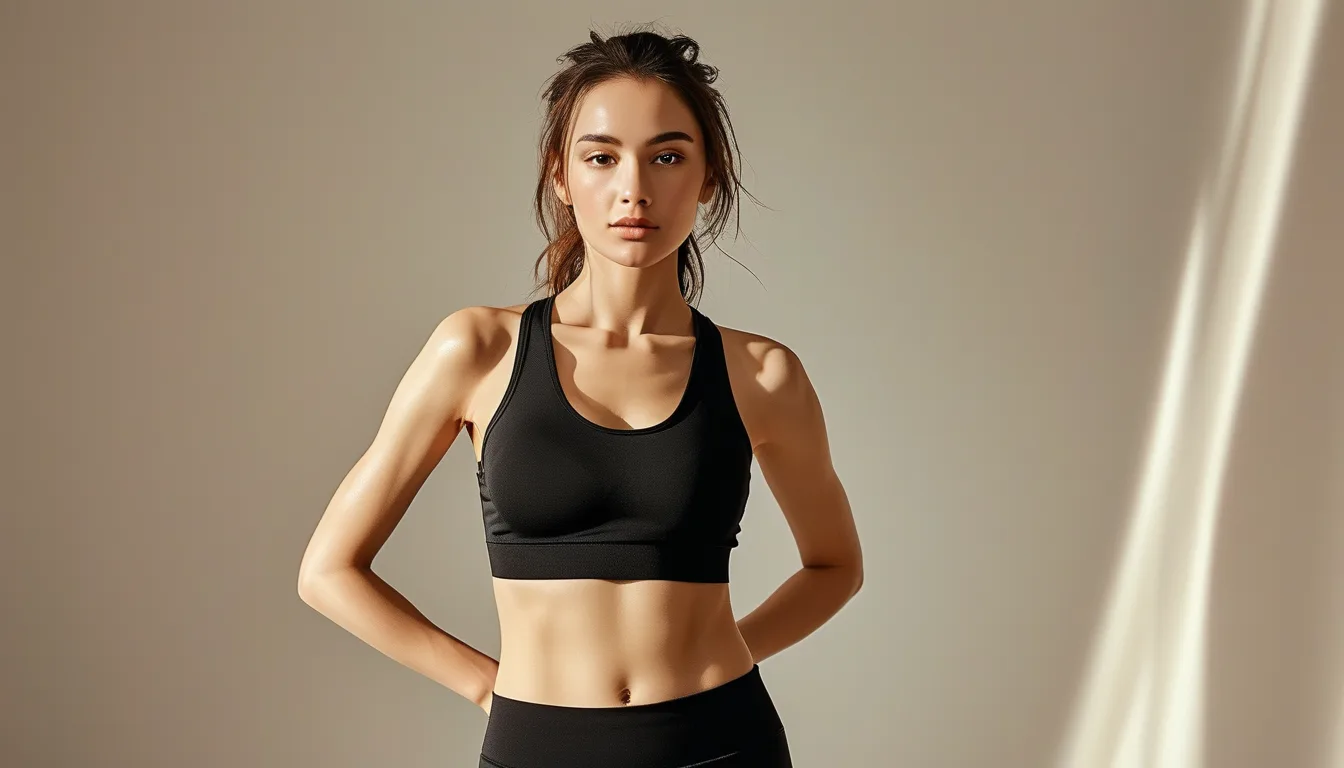
Why a Visible Waistband Line Under a Top Shortens the Leg Line
Quick Answer: The eye locates where your legs begin by finding the lowest strong horizontal line on your torso. A waistband ridge showing through a top creates exactly that line - and it usually sits lower than the visual break you were trying to create with a high rise, so the leg reads as starting at the ridge rather than at the top of the waistband. Fixing it is about eliminating the ridge, not raising the rise further: a seamless or wider waistband, a thicker or looser top layer, or a deliberate tuck that makes the line intentional.
It is one of those details that explains why two outfits with identical proportions read differently.

How does a ridge shorten the leg line?
Because horizontal lines tell the eye where sections begin and end.
Your eye segments a body at strong horizontals. A hem, a belt, a waistband, a color change - each one reads as a boundary. The lowest clear horizontal on the torso is what the eye takes as the start of the legs, whether or not that matches anatomy.
A waistband ridge is a strong horizontal even when it is faint. It is continuous, level, and runs the full width of the body. Continuity matters more than contrast - a subtle line that runs uninterrupted reads more strongly than a bolder mark that breaks up.
And the ridge is usually at the wrong height. The point of a high rise is to place the visual break high, lengthening the leg. But the ridge shows at the top edge of the waistband where the fabric steps up - and if your top is fitted, it shows at the bottom edge too. The lower of the two lines wins, which is the opposite of the intent.
Shadow does the amplifying. A ridge catches light on top and casts a thin shadow below, and that shadow reads as a darker horizontal band - which is precisely the visual cue for a division.
This is also why the problem is worse in overhead light - gym lighting, kitchen downlights, and midday sun all deepen the shadow under the ridge.
What creates the ridge in the first place?
Four causes, with different fixes.
1. A narrow, thick waistband. A 3cm band of dense elastic under a thin top produces a hard step. Wider bands distribute the same step over more distance, which softens the ridge dramatically - this is the main reason 12 to 15cm waistbands look smoother, not just the coverage.
2. A top that clings. Fine jersey, modal, and thin ribbed knits follow every contour. A slightly thicker or more textured fabric bridges the step without needing to be loose.
3. A waistband rolling or folding. A rolled band creates a double thickness and a much more pronounced ridge, plus an uneven line. This is a sizing and rise problem - a band that rolls is a band under the wrong tension for your torso shape.
4. The top’s own hem sitting right at the band. Two horizontals within a centimetre of each other create a busy, thickened line. Either tuck fully or make sure the top hem sits well clear of the waistband edge - somewhere between mid-hip and mid-thigh.
A quick diagnostic: photograph yourself side-on in overhead light. Ridges that are invisible in a mirror show up immediately in a photo with a light source above you, and that is the version other people see under most indoor lighting.

Myth vs Fact: Waistbands and Proportion
Myth: a higher rise always lengthens the leg. Fact: only if the top edge is the strongest visible horizontal. A high rise with a ridge showing at the bottom edge of the band can read shorter than a mid rise with no visible line at all.
Myth: seamless means invisible. Fact: seamless removes the stitch line, not the thickness step. A seamless waistband in a dense fabric still creates a ridge - what you want is a graduated edge, not just an unstitched one.
Myth: a longer top hides everything. Fact: a longer top hides the ridge and introduces its own horizontal at its hem, which is often lower. You may have swapped a faint line for a stronger one in a worse position.
Myth: black hides it. Fact: black hides color contrast and does nothing about shadow, and the ridge is a shadow problem. Black outfits in overhead light show waistband ridges clearly.
Myth: it only matters in fitted clothes. Fact: it matters most in fitted clothes and still shows in draped fabrics where the drape catches on the band. A skimming fabric can hang from the ridge, creating a visible starting point for the drape.
What actually fixes it?
Six options, from easiest to most structural.
1. Tuck deliberately. A full tuck or a front tuck converts an accidental line into a chosen one. The waistband becomes a visible, intentional boundary at the top of the band - which is exactly the high position you wanted. This is the best fix and the one people avoid.
2. Switch to a wider waistband. 12cm or more distributes the step. Combined with a top in a mid-weight fabric, this eliminates the ridge for most people entirely.
3. Choose a top with body. Ponte, a substantial rib, a mid-weight cotton, or anything with texture. The fabric needs enough structure to span the step rather than mould to it.
4. Move the top’s hem away from the band. Either well above it (tucked or cropped, if that suits your proportions) or well below it - mid-hip or lower. The dead zone is the two centimetres either side of the waistband edge.
5. Check the rise is right for your torso. A band that rolls or digs is the wrong rise, and no fabric choice fixes a rolling band. Rolling is a fit signal, not a quality signal.
6. Add a longer vertical. An open cardigan, a long necklace, or a front seam gives the eye a strong vertical to follow, which competes with the horizontal. This does not remove the ridge but reduces how much attention it gets.
One seasonal note: as layering season starts, the ridge problem largely solves itself under jackets and cardigans - but it gets worse under fine autumn knits worn alone, which are exactly the fabrics that cling most.
And worth saying plainly: this is a styling detail, not a flaw. It changes how a line reads, and nothing else.
FAQ: Waistband Lines, Answered
Why can I see the line in photos but not the mirror?
Mirrors are usually lit from the front or side; photos are often taken under overhead light, which deepens the shadow beneath the ridge. The photo version is what people see under most indoor lighting.
Does a wider waistband really help?
Yes, substantially. The same thickness step spread over 12cm instead of 3cm creates a much gentler gradient and a far weaker shadow line.
Should I just size up in the leggings?
Only if they are genuinely too tight. Sizing up reduces the tension ridge but often causes the band to roll, which creates a worse and more uneven line.
Is tucking always better?
It is the most reliable fix for the leg line, since it puts the strongest horizontal at the top of the waistband. Whether it suits the rest of the outfit is a separate question.
What top fabrics are worst for this?
Fine jersey, thin modal, lightweight ribbed knits, and anything with a high viscose content that drapes closely. Ponte, mid-weight cotton, and textured knits are much better.
Does this apply to jeans too?
Yes, and often more strongly, since denim waistbands are thicker and stiffer. The same fixes apply - tuck deliberately or wear a top with enough body to span the step.
TL;DR:
- The eye reads the lowest strong horizontal on your torso as where the legs start - and a waistband ridge is exactly that line.
- A high rise only lengthens if its top edge is the visible line; a ridge at the bottom edge undoes the whole effect.
- Causes: narrow thick bands, clingy thin tops, rolling waistbands, and hems sitting right at the band edge.
- Best fixes: tuck deliberately, use a 12cm+ waistband, choose a top with body, and keep hems out of the two-centimetre dead zone.
- Black does not hide it - the ridge is a shadow, not a color contrast.
Check it in a side-on photo under overhead light. If the line is there, one of five fixes handles it, and the tuck handles it best.
Keep Reading
This article is for general informational and styling purposes only. Fit, sizing, and product availability may vary.